The Drama Queens Within: How We Create Problems to Escape Life's Monotony If we create the drama in our lives to escape boredom and dullness, what does this tell us about the human condition? So many ...
If we create the drama in our lives to escape boredom and dullness, what does this tell us about the human condition? So many of our problems are self-created, and if we have had the dubious good fortune to get someone else to create a problem for us, we make sure we do our best to perpetuate it. Why end it and avoid the potential for excitement?
Surely the tedium of a perfect life would render such perfection useless, and how are we to appreciate perfection if not by contrast, so we create our problems, all of us, the reigning drama queens of our lives, and we entertain ourselves and others, our problems are our escape from a much bigger problem: monotony.
Which reminds me of one of those Ajit jokes. I loved those.
The Architecture of Manufactured Crisis
We construct our complications with the precision of a master carpenter building a cathedral. Every argument we initiate, every deadline we postpone until the last minute, every relationship we complicate unnecessarily—these are not accidents. They are deliberate escapes from the suffocating embrace of routine.
Consider the colleague who consistently creates workplace drama. She transforms mundane project discussions into heated debates about principle, turns simple email exchanges into exercises in passive aggression, and converts team meetings into battlegrounds where every hill becomes worth dying on. Her behavior appears destructive, but serves a deeper purpose: it provides the adrenaline rush that her otherwise predictable professional life lacks.
This pattern emerges because human consciousness cannot bear sustained emptiness. We are meaning-making creatures trapped in lives that often offer little natural excitement. The insurance adjuster reviewing claims all day needs something to elevate his pulse. The suburban housewife managing household routines craves narrative complexity. The accountant processing invoices yearns for stakes that matter.
The Dopamine Economy of Problems
Modern neuroscience has revealed what philosophers suspected: our brains are wired to seek stimulation and avoid boredom at almost any cost. The neurotransmitter dopamine, which drives motivation and pleasure-seeking, responds more strongly to unpredictable stimuli than to predictable rewards. A life of smooth sailing triggers less neural activity than a life of manufactured turbulence.
Research by Dr. Heather Lench at Texas A&M University demonstrates that people actively seek out negative emotions when positive ones become monotonous. Study participants, given the choice between continuing pleasant experiences or introducing unpleasant but varied experiences, consistently chose variety over comfort. The brain, it seems, prefers interesting misery to boring happiness.
This explains why people in stable relationships sometimes pick unnecessary fights, why successful professionals sabotage their careers with self-destructive behavior, and why lottery winners often report feeling less happy than before their windfall. The problems we create serve as narrative engines, transforming our lives from static photographs into dynamic films.
The Performance Aspect of Personal Problems
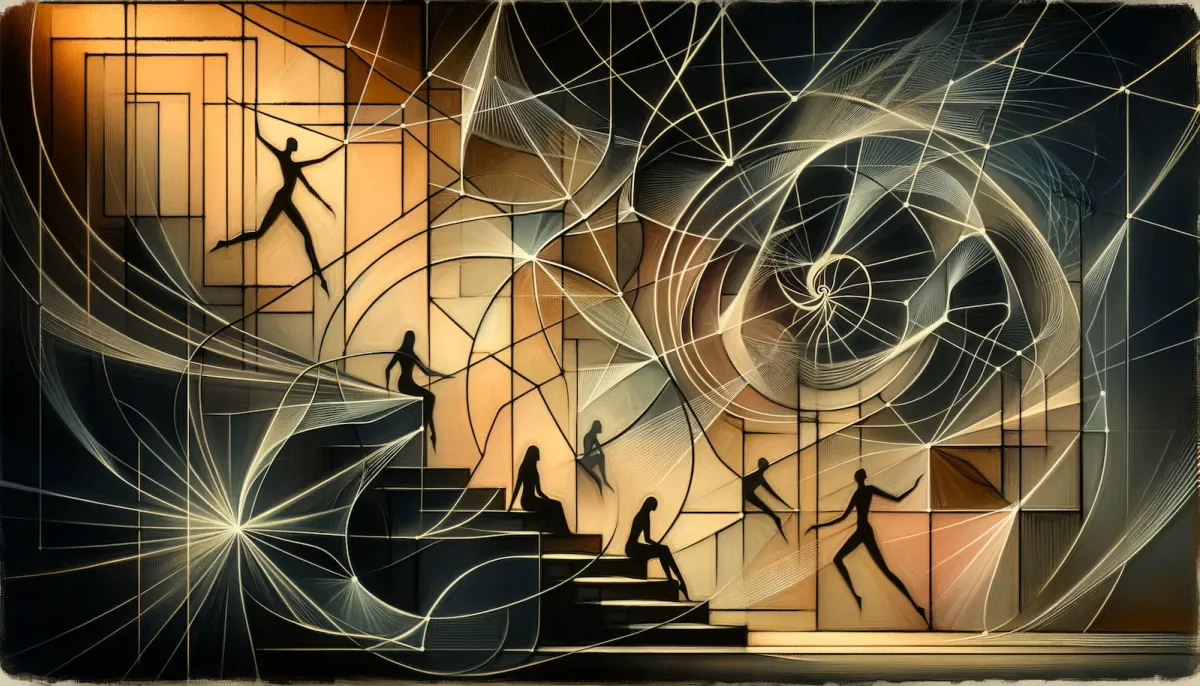
We are all performers in the theater of our own lives, and every good performance requires conflict. The stories we tell ourselves about our struggles become our identities. The woman who describes herself as "going through a difficult divorce" has found a way to make conversations interesting. The man who complains about his impossible boss has discovered a reliable source of sympathy and attention.
Social media has amplified this tendency exponentially. Our carefully curated feeds showcase not just our successes but our aestheticized struggles. The "authentic" post about anxiety, the "vulnerable" share about relationship challenges, the "real talk" about professional setbacks—these performances of difficulty serve dual purposes. They generate engagement from our networks and provide us with the intoxicating sensation of living through something significant.
The British novelist J.G. Ballard captured this phenomenon in his observation that "the marriage between reason and nightmare has produced a new kind of society." We have become connoisseurs of our own difficulties, cultivating them like exotic plants in a greenhouse of consciousness.
Historical Perspectives on Manufactured Drama
This tendency is not new. Throughout history, societies at the height of their prosperity have invented problems to maintain psychological engagement. The Romans, having achieved unprecedented peace and prosperity during the Pax Romana, developed increasingly elaborate and violent entertainments. Their amphitheaters served as pressure valves for a population suffering from what we might now recognize as existential ennui.
Medieval nobility, freed from the constant threat of invasion or starvation, developed elaborate codes of courtly love that transformed simple romantic attraction into labyrinthine psychological dramas. The concept of "courtly suffering" became an art form, with knights and ladies competing to experience the most exquisite forms of unrequited passion.
Even in literature, our greatest stories require conflict. Tolstoy's Anna Karenina creates her own destruction partly because a life of social conventions and pleasant routines offers insufficient narrative satisfaction. Shakespeare's tragic heroes consistently choose complicated paths that lead to ruin over simpler routes that lead to contentment.
The Modern Amplification Effect
Contemporary life has intensified our need for manufactured drama because it has simultaneously reduced natural sources of meaningful conflict while increasing our exposure to others' excitement through digital media. Our ancestors faced genuine existential challenges daily : predators, famine, disease, tribal warfare. These provided natural stimulation and clear purposes.
Today's challenges are often abstract and delayed. Climate change threatens us, but not immediately. Economic inequality affects us, but not dramatically. Political corruption concerns us, but not personally. We live in what the historian Francis Fukuyama called "the end of history" a period of relative stability that, paradoxically, creates psychological restlessness.
Meanwhile, social media feeds us constant streams of other people's dramas, adventures, and achievements, creating a comparative backdrop that makes our own lives seem insufficiently eventful. The result is a population simultaneously safer and more stimulated than any in human history, yet experiencing unprecedented levels of anxiety and depression.
The Cost of Drama Addiction
Like any coping mechanism, manufactured drama carries costs. Relationships suffer when one partner consistently creates unnecessary conflict. Career advancement stalls when professionals sabotage their own success. Physical health deteriorates under self-imposed stress. The very mechanism we use to escape boredom becomes a source of genuine suffering.
Dr. Timothy Kasser's research on materialism and well-being reveals a similar pattern: people who organize their lives around external stimuli; whether consumer goods, social media validation, or manufactured drama—report lower levels of satisfaction and higher levels of anxiety than those who find meaning in intrinsic activities.
The irony is profound. In trying to escape the discomfort of boredom, we create genuine discomfort. In seeking to make our lives more interesting, we often make them more painful. The cure becomes worse than the disease.
Toward Conscious Drama Creation
The solution is not to eliminate all drama from our lives, that would be both impossible and undesirable. Instead, we need to become conscious creators rather than unconscious victims of our need for stimulation. This means recognizing when we are manufacturing problems and choosing more constructive forms of excitement.
Creative pursuits offer one alternative. Writing, painting, music-making, and other artistic endeavors provide narrative complexity without real-world consequences. The novelist experiences murder and betrayal safely through her characters. The musician explores emotional depths through composition.
Physical challenges represent another outlet. Marathon training, rock climbing, martial arts practice—these activities provide genuine stakes and unpredictable outcomes while building rather than destroying life circumstances.
Intellectual challenges can satisfy our need for complexity. Learning new languages, tackling difficult books, engaging with complex ideas, these pursuits offer mental stimulation without interpersonal destruction.
The Wisdom of Conscious Choice
Perhaps the most profound realization is that we always have a choice between conscious and unconscious drama creation. The executive who recognizes her tendency to manufacture workplace conflicts can channel that energy into launching an innovative project. The partner who catches himself picking fights can redirect that need for intensity into passionate advocacy for causes he believes in.
The key is awareness. Once we recognize our role as the authors of our own difficulties, we can begin editing our life stories more skillfully. We can choose adventures over arguments, creation over destruction, conscious complexity over unconscious complication.
We are all drama queens in the theaters of our own lives. The question is not whether we will create problems, the question is whether we will create them consciously or unconsciously, constructively or destructively, in service of growth or in service of mere stimulation.
In the end, perhaps the greatest drama of all is the one between our higher and lower selves, between our capacity for wisdom and our hunger for excitement, between our need for peace and our appetite for chaos. That drama, at least, offers genuine stakes and the possibility of genuine resolution.
References:
[1] Lench, H. C., Flores, S. A., & Bench, S. W. (2011). Discrete emotions predict changes in cognition, judgment, experience, behavior, and physiology: A meta-analysis of experimental emotion elicitations. Psychological Bulletin, 137(5), 834-855.
[2] Ballard, J. G. (1974). Crash. Jonathan Cape.
[3] Fukuyama, F. (1992). The End of History and the Last Man. Free Press.
[4] Kasser, T. (2002). The High Price of Materialism. MIT Press.
Share this post
Shiju Thomas
Author & Leadership Coach